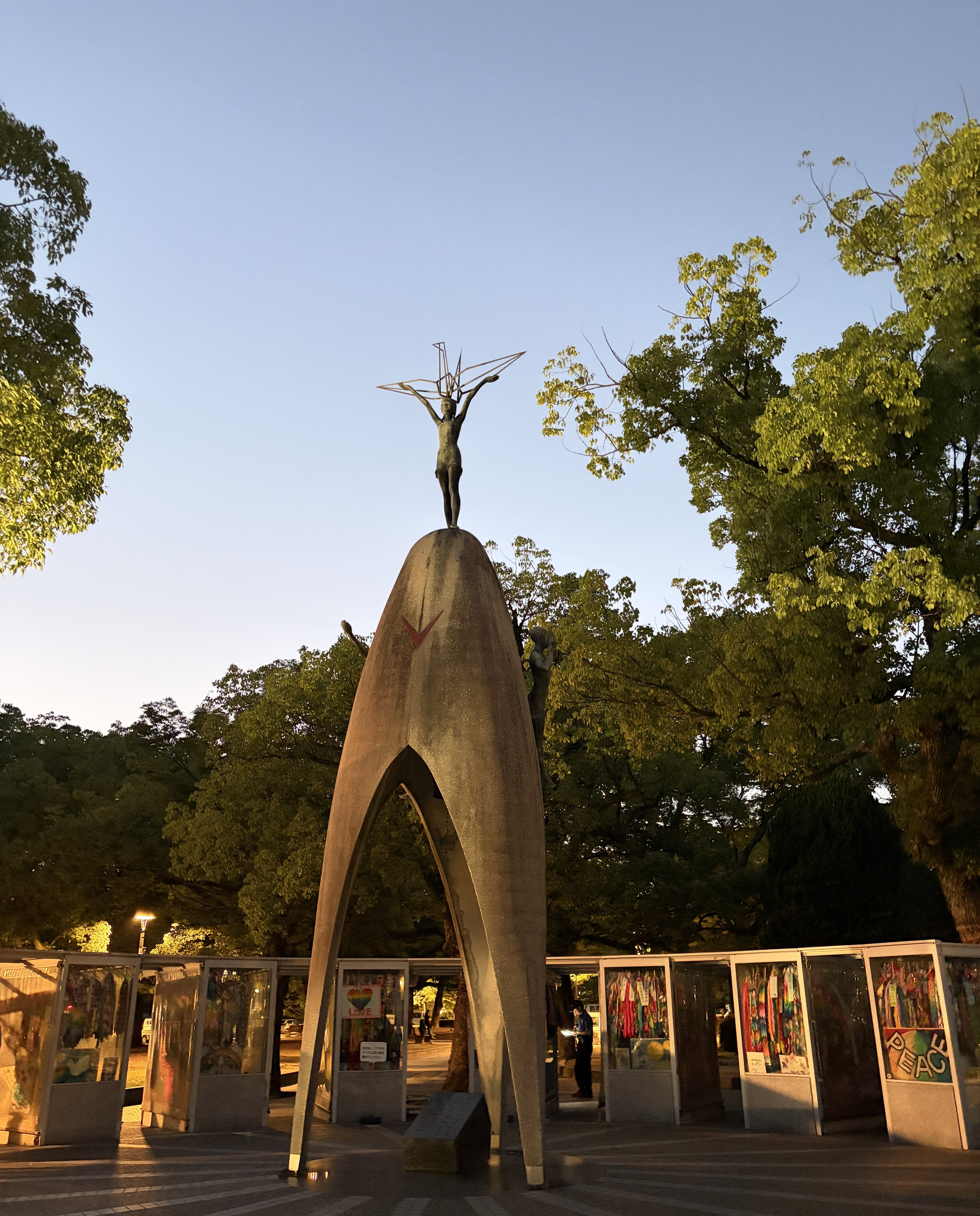
From 4 to 10 August 2026, I travelled through Hiroshima and Nagasaki with a delegation connected to Pax Christi Korea. I arrived in Japan after living and studying in South Korea, carrying an interest in peace but also many unanswered questions about history, development, democracy, and the relationship between memory and justice.
Japan felt highly organized in many ordinary parts of life: public transport, streets, public facilities, and the rhythm of the cities. Yet Hiroshima and Nagasaki reminded me that development cannot be measured only by infrastructure, technology, or economic capacity. A developed society must also be able to face difficult histories, make room for public discussion, and allow different generations to question what peace requires today.
Hiroshima: Peace in Public Space
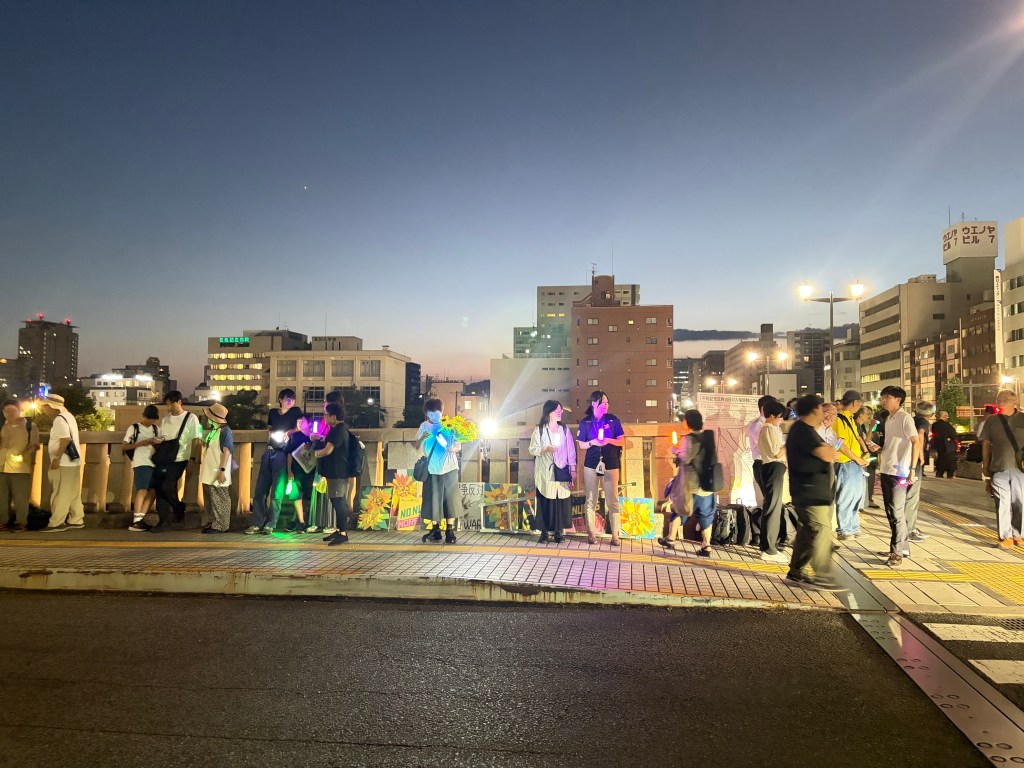
In Hiroshima, peace was visible in public space. I joined the Peace Long March around the city and saw people from many generations and backgrounds walking together. There were activists, community groups, churches, religious communities, older participants, and young people. It did not feel like peace belonged only to political leaders or to one organization. It was something people came to claim together.
The wider 2026 World Conference against Atomic and Hydrogen Bombs was held in Hiroshima from 4 to 6 August. Its programme included international meetings, the arrival of the Peace March, survivor testimony, government representatives, and peace-movement speakers; it called for a world free from nuclear weapons and for Japan to join the Treaty on the Prohibition of Nuclear Weapons.
On the evening of 5 August, I returned to the area around Hiroshima Peace Memorial Park and the Atomic Bomb Dome. From around 7:00 to 8:30 p.m., I joined a quiet light-stick demonstration. People walked, sang, and held paper messages with their hopes and demands for peace. It was calm, but it was not passive. The demonstration showed that public action does not always need loud speeches. Sometimes people make their position clear simply by gathering, walking, singing, and refusing to let memory disappear.
The following morning, Hiroshima held its official Peace Memorial Ceremony, marking 81 years since the atomic bombing. Around 50,000 people attended, including atomic-bomb survivors, bereaved families, United Nations representatives, and representatives from 121 countries and regions, as well as the European Union. The ceremony showed the international importance of Hiroshima’s message, but I also felt a difference between formal commemoration on the stage and the energy I had seen among people in the streets.
At one event, several speakers took the stage, including young people. However, I found myself asking whose voices are most connected to the meaning of such a gathering and whose voices remain less visible. This was not a judgment on every speaker or participant. It was a question about official remembrance: how can ceremonies remain connected to the concerns of citizens, survivors, younger generations, and those who continue to work for peace today?
I also learned more about the paper crane. For many people, it is connected with Sadako Sasaki and has become an international symbol of hope, healing, and a world without nuclear weapons. The paper cranes made remembrance feel less distant. They carried grief, but also a belief that people can choose another future.
Nagasaki: Peace, Mourning, and Prayer
Nagasaki felt different. The city was calmer during the commemoration period, at least from what I observed. There was less visible street activism than in Hiroshima, while the official ceremony on 9 August had a strong presence of national and international representatives.
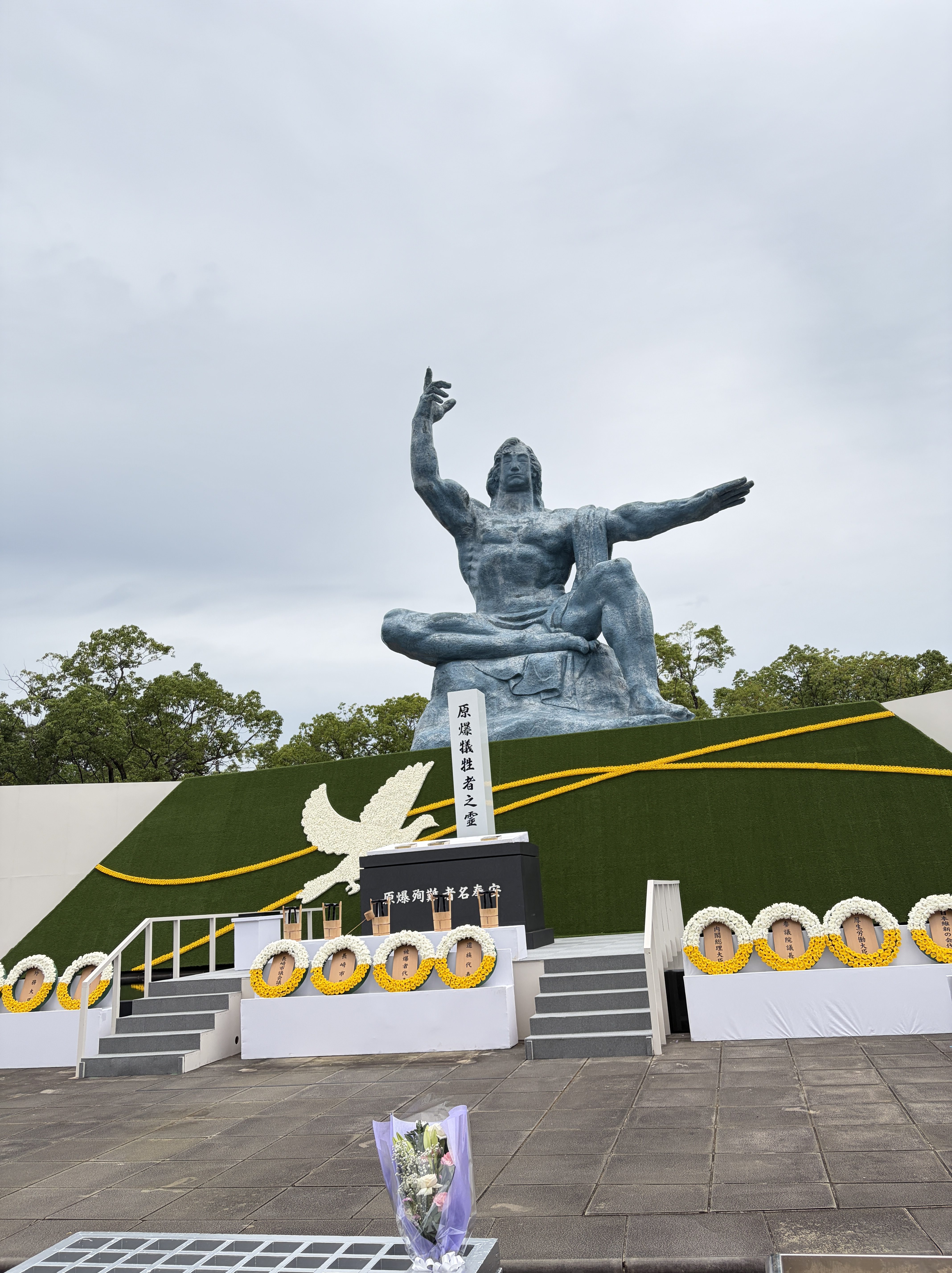
The Nagasaki Peace Memorial Ceremony marked the 81st anniversary of the atomic bombing. Approximately 2,600 people attended, including survivors, bereaved families, United Nations representatives, and delegates from 98 countries and the European Union. The moment of silence was observed at 11:02 a.m., the time the bomb exploded over Nagasaki in 1945.
For me, Nagasaki seemed to speak about peace through a quieter language: mourning, prayer, silence, and formal remembrance. I do not think one approach is better than the other. Hiroshima showed me peace expressed through public movement and activism. Nagasaki showed me peace expressed through solemnity and prayer. Together, they made me think that communities remember violence in different ways, and that these differences may come from local history, culture, religion, and civic life.
I also participated in an interreligious prayer gathering. Most of it was in Japanese, so I could not understand every word. Still, I understood the meaning of people from different faith traditions gathering to pray for peace. It reminded me that religion can offer a space for shared mourning and hope. At the same time, I came to see that prayer alone is not enough. Peace also needs public participation, education, justice, historical honesty, and political responsibility.
When Young People Asked About Peace
One of the moments that stayed with me most happened in Nagasaki, where I met two high-school students from Osaka who interviewed me. They asked me, “What is peace for you?” It was a simple question, but not an easy one.
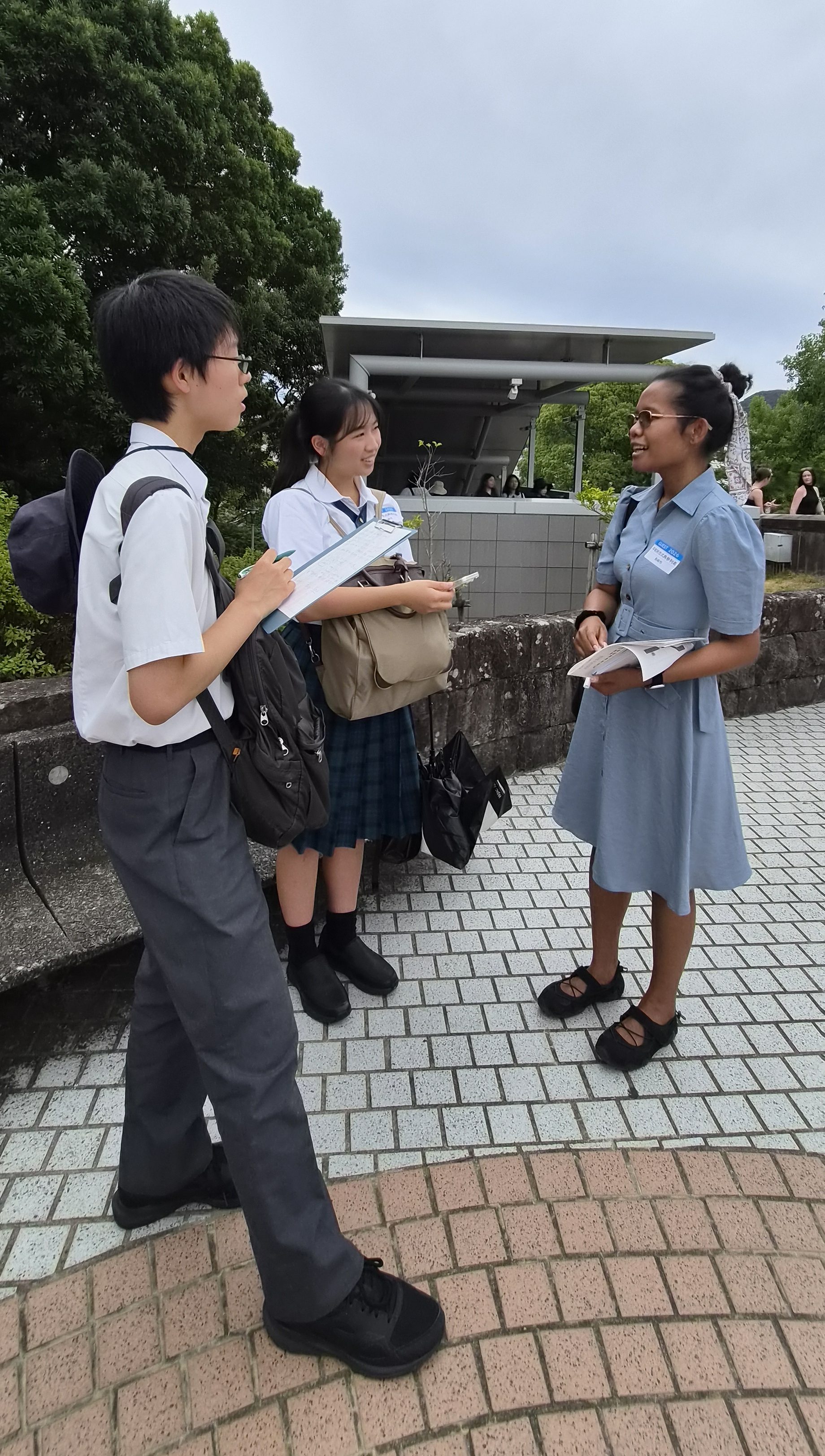
Our conversation moved beyond the atomic bombings. They shared their concerns about the current political direction of Japan, especially what they saw as reduced attention to education and health while military spending receives more focus. I heard similar worries in conversations with an activist in Hiroshima and a woman in Nagasaki. Their views were personal, but they reflected a wider question faced by many societies today: what does security mean, and who decides national priorities?
This question is not limited to Japan. Indonesia and many other countries also face debates about public budgets, social welfare, education, defence, and the growing influence of military thinking. Peace cannot only mean the absence of war. It should also mean that young people can study, that families can access health care, that citizens can speak freely, and that governments are accountable for the choices they make.
The students’ question made me reflect on my own answer. Peace, for me, is not simply quietness. It is the presence of justice, dignity, safety, and the possibility for people to live without fear. It requires governments to protect people, but it also requires citizens to remain involved, informed, and willing to question decisions made in their name.
History Across East Asia
Travelling from South Korea to Japan also deepened my questions about history. As an Indonesian, I grew up knowing that Indonesia experienced Japanese occupation during the Second World War. Yet living in Korea has made me more aware of the particular histories of colonial rule, forced labour, sexual violence, cultural suppression, and division that continue to shape Korean society and Korean-Japanese relations.
I do not want to compare suffering or decide which country experienced a more painful past. Colonial violence took different forms in different places, and every history deserves serious attention. What I began to understand is that historical memory is not taught, discussed, or carried in the same way everywhere. Education matters because it shapes what later generations know, question, and sometimes fail to see.
As a visitor, I left with more questions than answers. How can countries in East Asia remember the past without using it only for political conflict? How can historical truth support reconciliation without erasing injustice? How can young people inherit difficult memories while also building relationships across borders?
What I Carried Forward
Hiroshima and Nagasaki were not only places I visited. They became places that asked something of me. Hiroshima showed me people walking, singing, and making peace visible in the streets. Nagasaki showed me mourning, prayer, and the weight of silence. Both cities reminded me that nuclear weapons are not an abstract security issue. They are tied to human lives, families, bodies, cities, and memories.
As preparations continue for World Youth Day Seoul in August 2027, I hope young people across East Asia will have more opportunities to take part in pilgrimages and encounters that connect faith with peace, historical memory, and justice. World Youth Day Seoul is scheduled for 3 to 8 August 2027, only days before the anniversaries of Hiroshima and Nagasaki, making this connection especially meaningful for the region.
I carried home an understanding that peace is not created only through ceremonies, official speeches, or international statements. It is also built through the choices people make in public life: what they remember, what they question, whose stories they listen to, and whether they continue to speak when silence is easier.
 Abat Bertha
Leave a comment