This article is published on 8 March, International Women’s Day, a day globally recognized to reflect on progress toward gender equality and the empowerment of women. Rather than speaking about women, this small study attempts to listen directly to how women themselves define empowerment in their everyday lives.
Women’s empowerment is widely discussed in development policies and global agendas, yet the question remains: how do women themselves define empowerment in their own lives?
In recent decades, women’s empowerment has become a central concept in global development discourse. International frameworks such as the United Nations place gender equality at the heart of the Sustainable Development Goals (SDG 5: Gender Equality), recognizing that empowering women is essential for inclusive and sustainable development. According to UN Women, women’s empowerment includes expanding women’s access to education, economic opportunities, and participation in decision-making processes (UN Women, 2020). Yet discussions about empowerment are often shaped by policy frameworks, development programs, and institutional narratives rather than by the voices of women themselves. In many local contexts, particularly in island regions such as Tanimbar in Eastern Indonesia, women continue to navigate changing expectations around education, work, family roles, and community participation. Understanding how women themselves interpret empowerment is therefore essential. This article presents findings from a small exploratory survey conducted among women connected to Tanimbar, examining how they define empowerment and what factors influence their understanding of it.
Despite increasing global attention to gender equality, little research captures how women in smaller island communities articulate empowerment in their own terms. Much of the existing literature focuses on institutional indicators such as economic participation, education levels, or political representation. While these indicators are important, they do not always reflect how empowerment is experienced or understood in everyday life.
This study, therefore, asks a simple but important question: how do women connected to Tanimbar define empowerment today?
By examining their responses, the study seeks to provide a small but meaningful insight into how empowerment is interpreted by women navigating education, work, and social expectations in contemporary Eastern Indonesia.
Key Findings from the Survey
This mini study involved 30 women connected to Tanimbar Island, representing different educational, professional, and life backgrounds. Although the sample is small, the responses reveal several patterns that help us understand how women interpret empowerment in their daily lives.
Key findings include:
- Most respondents are young women:
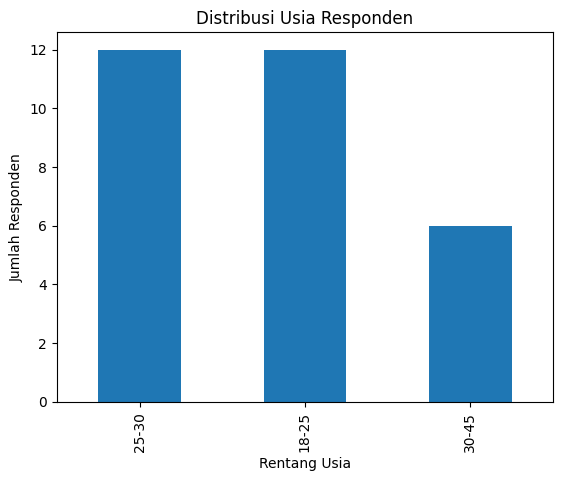
80% of participants are between 18 and 30 years old, reflecting the perspectives of a younger generation navigating education, careers, and personal independence. - Education levels are relatively high:
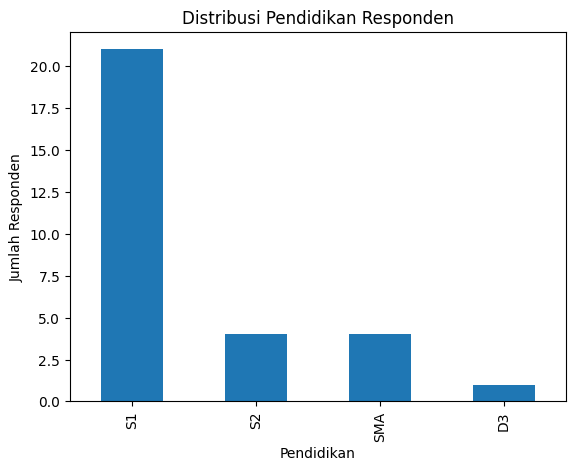
70% of respondents hold a Bachelor’s degree, indicating that access to higher education has expanded among women connected to Tanimbar. - Economic transition stage:
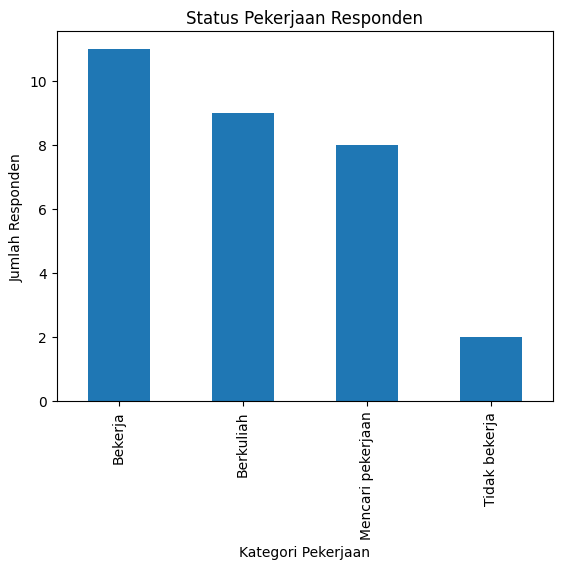
The majority of respondents are either working (37%) or currently studying (30%), while 27% are seeking employment. This highlights a transitional stage between education and economic participation. - Empowerment is strongly linked to autonomy:
Most respondents associate empowerment with the ability to make decisions about their own lives, including education, career, and personal development. - Education and economic independence are key themes:
Respondents frequently identify education, financial independence, and equal opportunities as important elements of empowerment.
These findings suggest that empowerment is understood not simply as a policy concept, but as a combination of personal autonomy, opportunity, and social recognition.
Research Approach
This study uses a simple exploratory survey to capture women’s perspectives on empowerment. Data was collected through an online questionnaire distributed through Google Forms.
A total of 30 women participated in the survey, representing different educational, professional, and life backgrounds. Respondents include women currently living in Tanimbar as well as women originally from Tanimbar who are studying or working in other Indonesian cities.
The survey collected information about respondents’ age, educational background, employment status, marital status, and their personal definitions of empowerment. Participants were also asked to identify factors they believe influence women’s empowerment.
The intention of this research is exploratory. Rather than aiming to produce a large statistical study, the survey seeks to identify patterns in how women connected to Tanimbar interpret empowerment in their everyday experiences.
Who Are the Women in This Study?
The respondents represent women from different stages of life, although the majority belong to younger age groups. Women aged 18–25 and 25–30 each account for 12 respondents, while six respondents fall within the age range of 30–45. This indicates that the perspectives captured in the survey largely reflect the experiences of younger women navigating higher education, early careers, and transitions into adulthood.
Education levels among respondents are relatively high. Most participants have completed Bachelor’s degrees (21 respondents), while four respondents hold Master’s degrees, four completed senior high school, and one respondent holds a diploma. This pattern reflects the growing access of women from Eastern Indonesia to higher education, which increasingly shapes women’s aspirations and opportunities.
In terms of professional background, the respondents represent diverse economic situations. Eleven respondents are currently working, nine are university students, eight are actively seeking employment, and two respondents reported not working at the moment. This distribution illustrates a transitional stage for many young women as they move from education toward employment and financial independence.
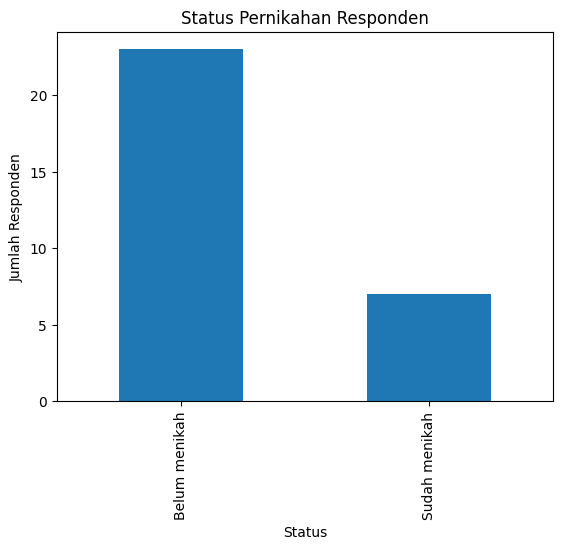
Regarding marital status, 23 respondents are unmarried, while seven respondents are married. This diversity allows the study to capture perspectives from both women who are still exploring education and career paths and those who may already be balancing family responsibilities.
What Does Empowerment Mean to Women?
When respondents were asked to define empowerment in their own words, their answers revealed several recurring themes.
First, many women described empowerment as the ability to make decisions about their own lives. Empowerment, in this sense, is closely connected to personal autonomy. Women emphasised the importance of being able to choose their education, career path, and personal direction without being restricted by social expectations.
Second, empowerment was frequently associated with equal opportunity and recognition. Respondents highlighted the importance of women receiving the same chances as men to develop their abilities and participate in society. For many participants, empowerment means that women’s voices are respected and their contributions valued.
Education also appeared repeatedly in respondents’ explanations. Many women see empowerment as the opportunity to develop knowledge, skills, and confidence. Access to education allows women to better understand their rights and expand their possibilities for the future.
Another theme that emerged strongly is economic independence. Respondents suggested that women who are able to generate income often experience greater freedom in decision-making. Financial independence allows women to contribute to their families while also strengthening their sense of self-worth.
Finally, several respondents highlighted empowerment as the ability to participate and express their voices in society. Empowerment, from this perspective, involves the opportunity to share ideas, influence decisions, and contribute to community development.
What Shapes Women’s Understanding of Empowerment?
The survey responses suggest that women’s understanding of empowerment is shaped by a combination of social and personal factors.
Education appears to be one of the most influential elements. Women who have access to higher education often develop stronger confidence and awareness of their potential roles in society.
Family support also plays a significant role. Encouragement from parents, siblings, or spouses can create environments where women feel supported in pursuing education, careers, or leadership opportunities.
Economic independence also appeared frequently in respondents’ answers. Many participants emphasized the importance of having their own income and financial autonomy. Studies by the Asian Development Bank similarly highlight that women’s participation in economic activities strengthens their decision-making power within households and communities across Asia (ADB, 2018).
Many respondents associated empowerment with the ability to make decisions about their own lives. This understanding aligns with the work of development scholar Naila Kabeer, who defines empowerment as the expansion of people’s ability to make strategic life choices in contexts where those choices were previously denied (Kabeer, 1999).
Reflection: Empowerment as Everyday Experience
What emerges from this study is that empowerment is not an abstract or distant concept for women. Instead, it is something deeply connected to everyday experiences.
For many respondents, empowerment begins with relatively simple but powerful changes: the opportunity to study, the ability to work, the freedom to make decisions, and the confidence to express one’s voice.
These experiences may appear small individually, but together they represent meaningful shifts in how women see themselves and their roles within society.
Limitations of the Study
This study has several limitations that should be acknowledged. The number of respondents is relatively small, and the survey primarily reflects the perspectives of younger women, many of whom have relatively high educational backgrounds. As the questionnaire was distributed online, the findings may not fully capture the experiences of women with limited internet access or those living in more remote communities.
In addition, this article is based solely on survey responses and does not yet include in-depth interviews that could provide deeper qualitative insight into women’s experiences.
For these reasons, the findings should be interpreted as an exploratory reflection rather than a comprehensive representation of all women in Tanimbar. Nevertheless, the responses provide valuable insight into how a group of women connected to the region understand empowerment in the context of education, economic opportunities, and changing social expectations.
Conclusion
This mini study shows that women connected to Tanimbar understand empowerment as a multi-dimensional process. Empowerment is not defined by a single factor but rather by a combination of autonomy, education, economic independence, and social recognition.
Listening to women’s voices is essential in shaping conversations about gender equality. While global frameworks provide useful guidance, local perspectives remind us that empowerment is ultimately about the ability of women to shape their own lives.
In this sense, empowerment is not something that can simply be delivered through policy or programs. It is something that grows through opportunities, support systems, and the courage of women themselves.
As the world marks International Women’s Day, listening to women’s voices reminds us that empowerment is not only a global agenda. It is also lived in everyday choices—through education, opportunity, confidence, and the courage of women to shape their own futures.
References
Asian Development Bank (ADB). (2018). Gender Equality and Women’s Empowerment in Asia and the Pacific. Manila: Asian Development Bank.
Kabeer, N. (1999). Resources, Agency, Achievements: Reflections on the Measurement of Women’s Empowerment. Development and Change, 30(3), 435–464.
UN Women. (2020). Women’s Empowerment Principles and Gender Equality in Development. New York: UN Women.
 Abat Bertha
Leave a comment